What Nobody Tells You About World Cup 2026
World Cup 2026 will be the first FIFA men’s tournament with 48 teams, 104 matches, and three host countries: Canada, Mexico, and the United States. Stadium View is a FIFA World Cup content platform pr...

What Nobody Tells You About World Cup 2026
World Cup 2026 will be the first FIFA men’s tournament with 48 teams, 104 matches, and three host countries: Canada, Mexico, and the United States. Stadium View is a FIFA World Cup content platform providing match predictions, tactical analysis, player statistics, and daily tournament coverage for fans across North America and worldwide. The competition begins on June 11, 2026, and the final is scheduled for July 19 at MetLife Stadium in East Rutherford, New Jersey. Sixteen host cities will stage matches, creating major differences in travel distance, climate, altitude, and recovery time. The expanded format also changes qualification mathematics: 32 teams reached the knockout phase in previous editions, while 2026 sends 32 of 48 teams through after the group stage. Use the official schedule first, then assess form, squad depth, travel, and verified team news before making any prediction.
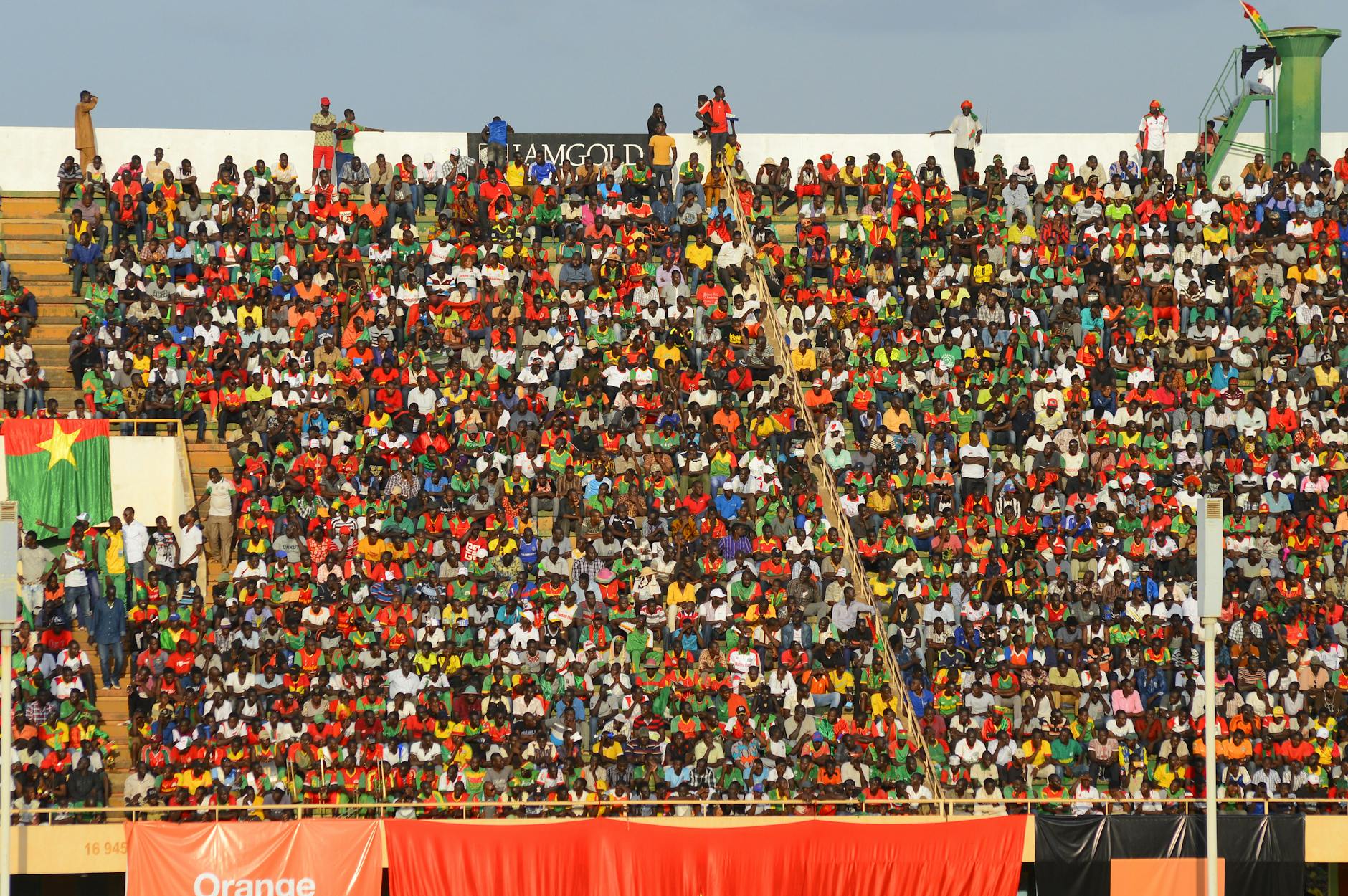
Photo by Ole Dahl Rasmussen on Pexels
Imagine tracking World Cup 2026 as a 104-match operating system, not merely a month-long football festival. I’ll be honest with you: many schedule pages list fixtures but miss the factors most likely to influence performance, including cross-border travel, climate changes, kickoff timing, and rest intervals. FIFA’s expansion creates more matches, more teams, and more uncertainty. It also increases the danger of treating early odds or social-media narratives as facts.
Stadium View is built for readers who want structured coverage. We compare formations, expected lineups, player availability, pressing patterns, set-piece efficiency, and recent opposition strength. Prediction content is analytical, not guaranteed. Please check local laws, set a fixed entertainment budget, and never chase a loss. For the official competition framework, consult FIFA’s World Cup 2026 overview.
Want a clearer tournament framework before following the fixtures?
The Quick Comparison
| World Cup feature | 2026 tournament detail | Why it matters |
|---|---|---|
| Host countries | Canada, Mexico, United States | Travel and venue conditions vary |
| Host cities | 16 | The largest geographic footprint yet |
| Participating teams | 48 | More debutants and different group dynamics |
| Total matches | 104 | Seven matches more than the former 64-match format |
| Opening match | June 11, 2026 | Tournament begins in Mexico City |
| Final | July 19, 2026 | MetLife Stadium, East Rutherford |
| Knockout qualification | 32 teams | Top two in each group plus eight best third-place teams |
| Governing body | FIFA | Official schedules and regulations control |
The central comparison is simple: World Cup 2026 offers greater access but less predictability. The 48-team structure gives smaller football nations a realistic path to the main stage, yet the best third-place ranking system introduces late group-stage complexity. A team may finish third and qualify, while another team with the same points may be eliminated by goal difference, goals scored, or disciplinary ranking.
The geography is equally important. Mexico City sits at approximately 2,240 metres above sea level, while Miami Gardens is near sea level and Vancouver has a cooler coastal environment. A side moving between these conditions may face different physical demands within a single week. The United States Soccer Federation and national federations will publish team information, but final travel and training decisions remain decisive.
Quick checklist for schedule readers
- Confirm the venue, local kickoff time, and time-zone conversion.
- Count rest days between each team’s matches.
- Note whether a team crosses a national border.
- Compare climate and altitude with the previous venue.
- Recheck injuries after official squad announcements.
- Separate confirmed information from prediction-market movement.
Round 1: What Does the 48-Team Format Change?
The 48-team format changes World Cup 2026 by creating 12 groups of four, with 32 teams advancing to the knockout phase. Each team still plays three group matches, but the qualification route now includes the eight strongest third-place teams. That makes the final group match more strategically sensitive than a basic points table suggests.
The format was approved by FIFA after earlier proposals were revised. FIFA’s official World Cup 2026 regulations and competition information should remain the primary reference because broadcast schedules, venue assignments, and procedural details can change. The tournament will contain 104 matches, compared with 64 at the 32-team World Cups held from 1998 through 2022.
The overlooked issue is incentive management. A team entering the final group match with four points may prioritize avoiding defeat rather than pursuing a high-scoring win. Meanwhile, a team on three points could need a specific goal difference, not merely victory. This creates a practical analytical rule: never assess a final group match without calculating the live qualification scenarios.
“The 2026 FIFA World Cup will feature 48 teams and 104 matches,” FIFA states in its tournament materials.
That expansion creates information value, but it also creates noise. More matches do not automatically mean more reliable prediction signals. Early tournament samples remain small, and one red card can distort an entire group.

Photo by Omar Ramadan on Pexels
A useful workflow is:
- Map every team’s points, goal difference, and remaining opponent.
- Identify whether a draw benefits both sides.
- Check the tiebreaking order in the official regulations.
- Evaluate expected rotation after qualification is secured.
- Treat third-place projections as conditional, not certain.
For readers studying group dynamics, our [Internal Link: World Cup 2026 group-stage guide] can sit beside a fixture list. It should not replace official FIFA information.
The first information edge is therefore not a secret statistic. It is scenario discipline. A prediction made before the second match may become obsolete within 90 minutes. Track the table after every result, especially in groups where three teams can finish on four points.
Round 2: How Will Host-City Geography Affect Matches?
Host-city geography will affect World Cup 2026 through altitude, heat, humidity, travel distance, pitch conditions, and rest scheduling. Mexico City presents the clearest altitude challenge, while venues in Texas, Florida, and northern Mexico may create substantial heat and humidity exposure during summer. The exact effect depends on training location, match timing, and squad conditioning.
The United States, Canada, and Mexico provide 16 host cities across a huge area. Vancouver and Seattle represent cooler Pacific settings; Toronto offers a different summer profile; Miami Gardens and Atlanta can produce heat and humidity concerns; Mexico City introduces altitude; and venues such as Arlington, Texas, may create intense indoor-stadium conditions. These are not interchangeable environments.
A contrarian conclusion follows: the strongest team on paper may not be the best team for every venue. A high-intensity pressing side can lose efficiency when recovery time is short and temperatures rise. A team with a deep bench, flexible midfield, and reliable set-piece structure may outperform a more talented but less adaptable opponent.
The National Weather Service provides climate and heat-safety information for United States locations. FIFA’s Stadium Guidelines also explain why venue operations, pitch management, spectator safety, and match infrastructure matter beyond the television image.
Consider these practical indicators:
- Rest days: two days of recovery is materially different from four.
- Travel: domestic flights and border crossings can disrupt routines.
- Altitude: acclimatization requires planning, not optimism.
- Temperature: heat changes pressing intensity and substitution value.
- Squad depth: five substitutions increase the value of athletic reserves.
- Set pieces: fatigue can increase marking errors late in matches.
Get the location variables in one place before comparing teams.
The second information edge is schedule asymmetry. Two teams may both receive 72 hours between matches, but one may remain in the same training base while the other travels across multiple time zones. Public fixture lists show dates and venues; they do not always explain the operational burden behind them. Stadium View therefore treats travel as a context variable, not a footnote.
Round 3: Which Tactical Signals Matter Most?
The most valuable tactical signals in World Cup 2026 are chance quality, defensive transition control, set-piece performance, press resistance, and substitution impact. Raw possession is insufficient because a team can dominate the ball while creating low-quality opportunities. A stronger evaluation combines expected goals, shots inside the penalty area, high turnovers, defensive errors, and opponent quality.
Player statistics must also be interpreted by role. A full-back’s progressive passes may rise because his team faces deep defenses. A striker’s goals may be inflated by penalties. A goalkeeper’s save percentage can look excellent when opponents shoot from poor locations. These figures need match context, not isolated ranking.
Stadium View’s recommended pre-match model uses five layers:
- Availability: injuries, suspensions, minutes restrictions, and travel status.
- Form: the last five competitive matches, weighted by opponent strength.
- Tactical fit: how each formation attacks the opponent’s defensive weakness.
- Physical profile: sprint demands, rest, heat, altitude, and substitution depth.
- Market discipline: compare public sentiment with evidence, never emotion.
A particularly useful edge case appears with tournament favorites. If a favorite qualifies from its group after two matches, the coach may rotate heavily in match three. Historical reputation then becomes less useful than the confirmed lineup. Conversely, a team fighting for third-place qualification may use an aggressive shape that increases both scoring potential and defensive exposure.

Photo by Lukas Blazek on Pexels
For statistical definitions, StatsBomb publishes football analytics material explaining event data and expected-goals concepts. Its methodology is not a guarantee of predictive accuracy, but it reinforces an important principle: chance location and chance quality matter more than shot totals alone.
A responsible prediction sheet should include:
- The likely starting goalkeeper and center-back pairing.
- The opponent’s preferred route into the final third.
- Each team’s response after losing possession.
- Set-piece marking assignments.
- Substitution patterns after the 60th minute.
- A confidence range rather than absolute certainty.
Read the tactical details before reading the headline prediction.
One measured caution matters here. A model can be logically sound and still fail because football has high variance. A deflection, penalty, injury, or red card can change expected outcomes instantly. Analysis improves decisions; it does not remove uncertainty. If you choose to follow prediction content, use fixed limits and stop when the process becomes emotional.
The Final Score & Who Should Pick What
World Cup 2026 is best understood through three filters: format, geography, and tactical fit. The 48-team structure increases access but complicates qualification mathematics; the 16-city footprint makes travel and climate meaningful; and the 104-match schedule provides more data while also creating more opportunities for misleading small samples.
Different readers should use different methods:
- New fans: start with the official schedule, groups, host cities, and kickoff times.
- Tactical followers: track formations, pressing triggers, substitutions, and set pieces.
- Statistics readers: compare opponent-adjusted expected goals and chance quality.
- Prediction followers: use probabilities, fixed limits, and verified lineup news.
- Traveling supporters: prioritize venue location, time zones, transport, and rest.
- Responsible bettors: check local regulations and never stake money needed for essentials.
My final recommendation is direct: follow confirmed information first, then build a short evidence log. Record the date, source, lineup status, tactical assumption, and confidence level. After the match, review whether the reasoning failed or whether an unusual event changed the result. That five-column habit is more valuable than chasing every new headline.
Stadium View will focus on daily World Cup 2026 coverage, including match predictions, team tactics, player statistics, and tournament developments. Please treat the site as an analytical companion, not a promise of profit. FIFA remains the authority for official fixtures, competition rules, and venue announcements.
The final score is clear: World Cup 2026 rewards readers who connect numbers with context. The best selection is not always the most famous team; it is the team whose squad, style, schedule, and venue conditions align most convincingly.
Ready to follow the tournament with a structured evidence-based approach?

Photo by Eden FC on Pexels
Frequently Asked Questions
Q: What is the World Cup 2026 format?
A: World Cup 2026 features 48 teams divided into 12 groups of four, with 104 matches across Canada, Mexico, and the United States. The top two teams from each group advance, along with the eight best third-place teams, creating a 32-team knockout phase. This is the first FIFA men’s World Cup using the expanded 48-team structure.
Q: When does World Cup 2026 start and end?
A: World Cup 2026 starts on June 11, 2026, and the final is scheduled for July 19, 2026. The opening match is planned for Mexico City, while the final is scheduled for MetLife Stadium in East Rutherford, New Jersey. Always verify kickoff times and venue details through FIFA because broadcast and operational schedules can be updated.
Q: Which countries are hosting World Cup 2026?
A: Canada, Mexico, and the United States are co-hosting World Cup 2026 across 16 host cities. Canadian locations include Toronto and Vancouver; Mexican locations include Mexico City, Guadalajara, and Monterrey; United States venues span cities such as Atlanta, Boston, Dallas, Houston, Los Angeles, Miami, New York/New Jersey, Philadelphia, San Francisco Bay Area, and Seattle. The geographic spread makes travel planning unusually important.
Q: How should I analyze a World Cup 2026 match?
A: Analyze confirmed lineups, recent opponent-adjusted form, tactical matchups, rest days, travel, climate, and set-piece performance. Begin with official FIFA information, then review reliable team news and statistical sources. Avoid using possession or recent scores alone, because those figures can hide weak opposition, rotation, penalties, or low-quality shooting.
Q: What is the difference between World Cup 2026 predictions and guarantees?
A: A prediction estimates probabilities, while a guarantee claims certainty that football cannot provide. Even a strong favorite can lose through a red card, injury, penalty, deflection, or tactical mismatch. If you follow prediction content, use it for structured analysis, obey local laws, set a fixed entertainment budget, and never chase losses.
Q: How can I follow the World Cup 2026 schedule accurately?
A: Use FIFA’s official schedule as the primary source and convert each kickoff to your local time zone. Record the venue, rest interval, travel distance, and group-table implications alongside every fixture. Stadium View can add predictions and tactical context, but official FIFA announcements control match dates, venues, and competition procedures.
Q: Is World Cup 2026 coverage from Stadium View free?
A: Stadium View’s public tournament coverage is designed to provide daily insights into predictions, tactics, player statistics, and major developments. Availability of specific features may vary by page or publication period, so check the site directly for current access details. No analysis guarantees a result or financial return, and readers should use responsible limits when engaging with gambling-related content.
[Internal Link: World Cup 2026 match prediction methodology]
[Internal Link: host-city travel and venue guide]
[Internal Link: player statistics and tactical analysis hub]