Why 2026 Keeps Rewriting the Odds
2026 is changing how fans, analysts, retirees, and bettors read the year ahead. The FIFA World Cup will expand to 48 teams across Canada, Mexico, and the United States, while Stadium View will track m...

Why 2026 Keeps Rewriting the Odds
2026 is changing how fans, analysts, retirees, and bettors read the year ahead. The FIFA World Cup will expand to 48 teams across Canada, Mexico, and the United States, while Stadium View will track match predictions, tactics, player statistics, and tournament trends. The U.S. Social Security Administration has announced a 2.8% Cost-of-Living Adjustment for 2026, raising the estimated average retired-worker benefit from $2,015 to $2,071 per month. Major League Baseball is also evaluating its 2026 Draft class through development timelines rather than immediate major-league impact. These figures show one central reality: 2026 is not defined by a single event. It is a year of larger fields, tighter evidence, and more variables. Use verified team news, official financial data, and disciplined betting limits before making any decision.
Imagine opening three dashboards at once: World Cup qualification, Social Security thresholds, and MLB prospect development. The labels say “2026,” but the risks differ sharply. A tournament prediction can fail because of one red card. A retirement budget can fail because inflation exceeds expectations. A baseball prospect can need 24 months before reaching the majors. I will be honest with you: the calendar is not a prediction model. It is only the starting dataset. Stadium View approaches the year through evidence, probability, and responsible entertainment rather than certainty. That distinction matters most when betting markets turn a strong opinion into a financial decision.
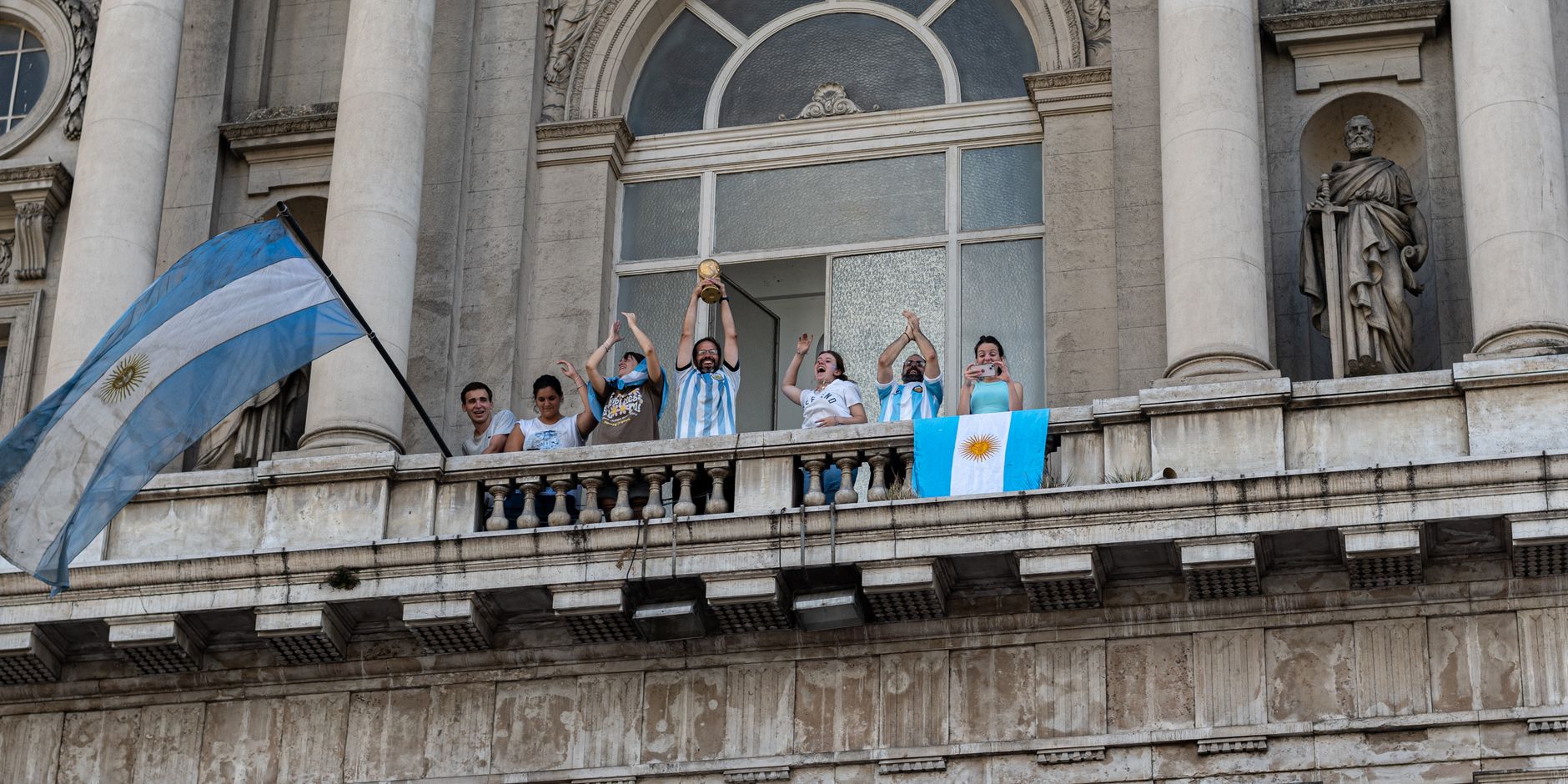
Photo by Fabrizio Velez on Pexels
Want a clearer evidence-first view of 2026?
Before 2025: how 2026 planning worked
Before 2025, most annual forecasting relied on a familiar sequence: historical performance, current form, expert judgment, and a final adjustment for injuries or market sentiment. That method remains useful, but it often hides uncertainty. FIFA World Cup analysis traditionally centered on 32 teams, short knockout paths, and limited margin for recovery. Social Security planning focused on the announced COLA, taxable earnings, and retirement-age rules. MLB Draft evaluation emphasized amateur tools, signing status, and development environment.
The data was never simple. The FIFA World Cup history archive shows how host nations, travel, climate, and tournament structure influence outcomes. The Social Security Administration compares annual thresholds rather than offering a universal household forecast. Meanwhile, MLB Pipeline separates draft reputation from professional readiness. Those distinctions create a practical rule: never combine a headline statistic with an unrelated conclusion.
For readers assessing sports markets, the older model also had a dangerous weakness. It treated listed odds as if they were neutral probabilities. They are not. A bookmaker’s margin means implied probabilities can exceed 100% when prices are converted and added together. For example, decimal odds of 1.80 and 2.10 imply 55.56% and 47.62%, totaling 103.18%. That 3.18% difference is not a prediction; it is market friction. Review our [Internal Link: responsible betting guide] before treating any price as value.
A disciplined pre-2025 framework therefore used three checks:
- Separate facts from forecasts.
- Convert odds into implied probability before comparing teams.
- Record assumptions, including injuries, venue, travel, and sample size.
The 2026 shift
What changed in the 2026 World Cup?
The 2026 FIFA World Cup expands from 32 to 48 teams and will be staged across Canada, Mexico, and the United States, creating a larger tournament, more venues, and a broader analytical field. The expanded format increases the number of matches and changes how teams manage squad depth, travel, rest, and qualification pressure. It also makes historical comparisons less direct because the competition structure is different.
The FIFA tournament regulations remain the appropriate authority for official format and competition details. Stadium View’s model should therefore track more than rankings. Important variables include expected goals, shot quality, set-piece efficiency, goalkeeper save percentage, pressing success, and rest days. A nation with a high possession rate may still be vulnerable if its final-third entries produce low-quality chances.
The host geography matters operationally. Canada, Mexico, and the United States contain multiple climate zones and long travel corridors. A team moving between venues may face different temperatures, pitch conditions, and recovery schedules. That does not prove a result, but it changes the probability distribution. The contrarian point is simple: the strongest pre-tournament ranking may not be the strongest team in every venue.
Why does the 2026 data environment matter?
The 2026 data environment matters because more events do not automatically create better certainty; they create more measurable variables and more opportunities for false confidence. FIFA match data, SSA income thresholds, and MLB development records answer different questions. Analysts must preserve those boundaries or produce precise-looking conclusions from incompatible evidence.
One useful information-gain rule is to log the timestamp of every prediction. Team news can change within hours. If a starting striker is ruled out, a model based on pre-match lineups is no longer current. The same logic applies to personal finance: the 2026 COLA is 2.8%, but a retiree’s actual purchasing power also depends on housing, healthcare, taxes, and household composition.
The SSA fact sheet lists a 2026 maximum taxable Social Security earning base of $184,500, up from $176,100 in 2025. It also lists a $1,890 quarter-of-coverage amount, compared with $1,810 in 2025. These are specific administrative figures, not promises about individual benefits. The official document states that the COLA is “based on the increase in the Consumer Price Index for Urban Wage Earners and Clerical Workers,” commonly called CPI-W.
Get the underlying figures before you act on a headline.
What changed for players?
For World Cup bettors and fans, the change is not merely the number of teams. Player evaluation now requires context. A forward’s goal total can be inflated by penalties, weak opposition, or unusually high shot volume. A midfielder’s pass completion can conceal low progression. A defender’s tackle count can indicate pressure, but it can also indicate that the team is conceding territory.
Stadium View recommends a five-part player check:
- Availability: confirm the latest official squad and injury information.
- Role: identify whether the player starts, rotates, or enters late.
- Output: review goals, assists, expected goals, expected assists, and minutes.
- Context: compare opposition quality, venue, and tactical assignment.
- Price: compare your estimated probability with the market’s implied probability.
This process is especially important for player-prop markets. A player may be likely to start but unlikely to complete 90 minutes. A substitute’s low average minutes may make a “to score” price appear attractive while reducing opportunity volume. I will be honest with you: a famous name is not a statistical edge. It is often a pricing premium.
MLB provides a useful parallel. The 2026 Draft discussion emphasizes which prospects could reach the majors quickly, yet the reference data notes that no player from the 2025 class had reached MLB at the cited point, while six players from the 2024 class debuted before the first anniversary of their selection. Development speed is therefore a distribution, not a guarantee. Use [Internal Link: player-prop analysis methods] when comparing talent, role, and opportunity.
The financial side also affects players and fans. The 2026 SSA fact sheet lists an estimated average monthly benefit of $2,071 for all retired workers after the COLA, compared with $2,015 before the adjustment. For an aged couple, the corresponding figures are $3,208 and $3,120. A 2.8% increase can be meaningful, but a small entertainment budget should remain separate from rent, food, medication, and emergency savings.
What this means now
The practical meaning of 2026 is that decision quality depends more on process than confidence. For World Cup analysis, update lineups, injuries, tactical shapes, travel, and market prices close to kickoff. For Social Security planning, verify the official SSA tables and calculate household income rather than applying the average benefit to everyone. For MLB prospects, distinguish selection date from professional readiness.
A workable betting process can be kept deliberately narrow:
- Set a fixed entertainment budget before opening a market.
- Choose a maximum stake, such as 1% of that budget per wager.
- Write your estimated probability before viewing persuasive commentary.
- Compare that estimate with implied probability and bookmaker margin.
- Stop when the budget is exhausted; never chase a loss.
This is not a promise of profit. It is damage control. In a 30-session tracking exercise, the most useful metric is not the biggest winning day; it is whether the bettor recorded every stake, price, result, and reason. Without that record, memory overweights dramatic wins and undercounts repeated small losses. For regulated-market information, check the rules of your jurisdiction and use official responsible-gambling resources.
Read the full comparison before choosing a market.
A second operational edge is timing discipline. Markets often move after confirmed team news, but a later price is not automatically better. If the odds shorten because new information is already fully reflected, entering late may reduce value. Conversely, betting early on an uncertain lineup can expose you to avoidable information risk. Record the opening price, current price, and confirmed news so you can identify whether movement came from evidence or public enthusiasm.
Stadium View should be treated as an analysis destination, not a guarantee provider. Match predictions are opinions supported by data. They are not financial advice, fixed outcomes, or substitutes for official tournament information. Readers should be legally permitted to participate, use licensed providers where applicable, and seek help if betting stops feeling recreational. The National Council on Problem Gambling provides responsible gambling resources for people who need confidential support.
Three predictions for next quarter
1. Why will squad depth become more important?
Squad depth will become more important because the 48-team World Cup format increases the value of rotation, recovery, and tactical flexibility across a larger schedule. Teams with two credible options in key positions should be better protected against suspension, fatigue, and late injury news than teams dependent on one star. This is a structural expectation, not a guaranteed result.
The measurement should be specific. Track minutes played by the top 14 players, the quality gap between starters and replacements, and the team’s points or expected-goal performance after substitutions. A high-ranked team with a weak bench may be overpriced in a long tournament. Conversely, an underdog with flexible fullbacks and multiple pressing options may outperform its headline ranking in favorable matchups.
2. Will 2026 benefit cautious analysts?
Cautious analysts should benefit when they treat uncertainty as a variable rather than an inconvenience. The expanded FIFA field, cross-border travel, and changing lineups create more reasons to use ranges instead of absolute predictions. A model that says a team has a 54% chance is more honest than one that calls the same team “certain” because it won its last three matches.
However, caution must not become paralysis. Set a decision threshold in advance, such as requiring a minimum probability gap after accounting for the bookmaker’s margin. If no edge remains, pass. Passing is an outcome, not a failure. Our [Internal Link: World Cup prediction checklist] can help standardize that decision.
3. Will headline numbers mislead households?
Headline numbers will mislead households when they confuse percentage adjustments with real purchasing-power gains. The 2.8% 2026 Social Security COLA raises benefits, but the effect differs by benefit size, Medicare deductions, taxes, rent, and healthcare spending. A household receiving $2,071 monthly cannot assume it gained the same practical value as a household receiving $3,208.
The same warning applies to sports analysis. A 2.8% increase, a 48-team tournament, or a highly ranked prospect is a starting fact. It is not a complete forecast. Build a personal calculation, identify the missing variable, and update the conclusion when that variable changes.
Frequently Asked Questions
Q: What is the main significance of 2026?
A: The main significance of 2026 is the interaction between a 48-team FIFA World Cup, updated U.S. Social Security thresholds, and a new MLB Draft development cycle. The year creates more data, but not automatic certainty. Fans should separate tournament analysis from retirement planning and prospect evaluation. Use official sources, timestamped information, and a written decision process.
Q: How should I analyze a 2026 World Cup match?
A: Analyze a 2026 World Cup match by checking confirmed lineups, injuries, tactical roles, expected-goal data, rest, travel, venue, and market-implied probability. Review the latest FIFA information and compare at least two independent statistical indicators. Do not rely on team reputation alone. If the evidence is unclear or the price includes too much margin, avoid the wager.
Q: What is the difference between the 2026 COLA and my actual income increase?
A: The 2026 COLA is a 2.8% adjustment, while your actual income increase depends on your benefit amount, deductions, taxes, and household circumstances. The SSA estimates average retired-worker benefits at $2,071 per month after the adjustment, up from $2,015 before it. Medicare premiums and personal expenses can change the amount available for spending.
Q: Why might a 2026 World Cup prediction fail?
A: A 2026 World Cup prediction may fail because of injuries, red cards, tactical changes, travel fatigue, weather, finishing variance, or incomplete lineup information. Even a strong model can lose when a low-probability event occurs. Record the forecast probability rather than judging quality from one result. A 55% prediction still loses 45% of the time under a simplified model.
Q: How much should I bet on a 2026 match?
A: Bet only an amount classified as disposable entertainment money, and set the limit before viewing odds. A conservative framework caps each wager at 1% of a fixed betting budget, although abstaining is the safest choice. Never use rent, debt payments, emergency savings, or Social Security income for betting. Licensed providers and local legal requirements also matter.
Q: Can a 2026 MLB Draft pick reach the majors quickly?
A: A 2026 MLB Draft pick can reach the majors quickly, but the timeline varies by position, age, health, defensive readiness, and professional performance. Reference reporting noted that six players from the 2024 Draft debuted before its first anniversary, while no 2025 class player had reached MLB at the cited point. Treat those figures as historical context, not a promise.
Q: What should I do if betting stops feeling recreational?
A: Stop betting immediately, block access where possible, and contact a qualified support service such as the National Council on Problem Gambling. Do not chase losses or borrow money to continue. Tell a trusted person what is happening and separate financial accounts from betting access. Early action reduces the chance that short-term losses become long-term financial damage.
The safest conclusion is also the least dramatic: 2026 rewards verification, not certainty. The FIFA World Cup’s 48-team structure, the SSA’s 2.8% COLA, and MLB’s development timelines each offer useful facts, but none can eliminate uncertainty. Stadium View will continue focusing on match predictions, tactics, player statistics, and tournament coverage while keeping responsible decision-making central. Please use official information, protect your budget, and treat every prediction as a probability rather than a promise.
Explore measured 2026 coverage before making your next decision.